
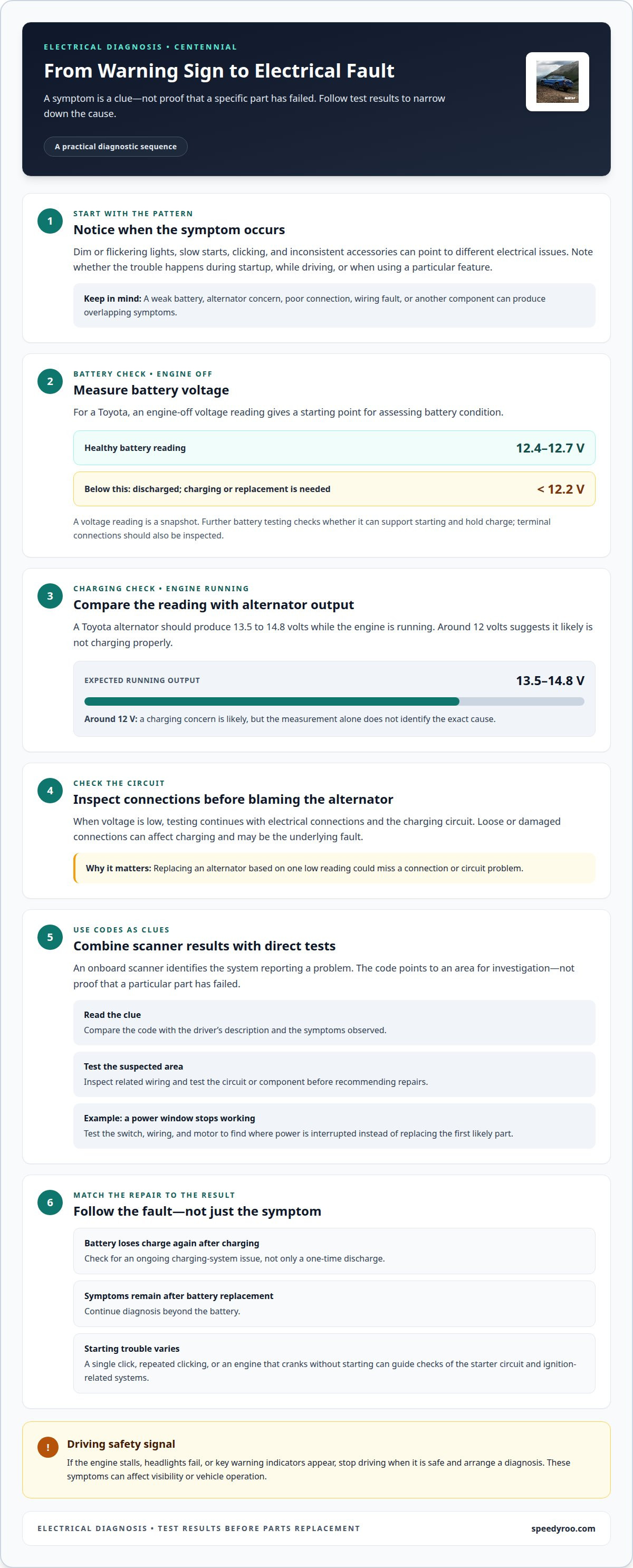
A warning light is only a clue: dim or flickering lights, slow starts, and accessories that work inconsistently can also point to an electrical fault. For car electrical diagnosis in Centennial, testing the battery and charging system, then interpreting trouble codes alongside symptoms, helps narrow the cause. A healthy Toyota battery should measure 12.4 to 12.7 volts with the engine off; below 12.2 volts, it’s discharged and needs charging or replacement.
It’s understandable to suspect the battery when a vehicle struggles to start, but the cause may also involve the alternator, wiring, fuses, or another electrical component. Car electrical diagnosis in Centennial helps distinguish these possibilities through targeted testing instead of replacing parts based on a symptom alone.
This guide covers common warning signs, battery and charging-system checks, and what trouble codes can reveal. It also explains why a vehicle’s make and model matter, so you can see how careful testing narrows a confusing symptom to a specific fault.
Key Takeaways
- Notice patterns such as flickering lights or inconsistent accessories, then consider how they relate to starting or charging symptoms.
- Understand how charging-system test results help distinguish an alternator concern from other electrical faults.
- Use trouble codes as diagnostic clues, not as automatic proof that a particular part needs replacement.
- Keep the vehicle’s make and model in view when diagnosing a fault; Speedy Roo Motorsports & Repair services select Japanese brands.
Alternator and charging-system testing
A Toyota alternator should produce 13.5 to 14.8 volts while the engine is running. A reading around 12 volts suggests it likely isn’t charging properly. These figures help guide diagnosis, but one measurement doesn’t identify every possible cause. A technician considers the reading alongside the vehicle’s symptoms and the condition of its charging circuit.
Testing may begin with a battery-voltage check while the engine is running, followed by an assessment of alternator output. If voltage is low, the next step is to inspect electrical connections and the charging circuit before recommending alternator repairs. A loose or damaged connection can affect charging, so replacing the alternator based on one low reading could miss the underlying fault. Testing helps distinguish an alternator problem from another issue affecting the same system.
For example, dim lights or a battery warning light together with low running voltage can point to a charging-system concern. A technician can compare the symptoms with test results and inspect the relevant connections. Reading a warning light is not the same as diagnosing the alternator: the light signals a concern, while measurements help narrow down its source.
Diagnostic charges and repair estimates aren’t necessarily handled the same way by every Centennial shop. A diagnostic fee may be separate from repair labor, and whether it’s applied toward repairs depends on the shop’s terms. Before authorizing work, ask what the testing includes, what the charge covers, and whether the estimate separates diagnosis from repairs.
Electrical and charging-system testing can help identify alternator concerns. Before authorizing diagnostic work, ask which tests will be performed, what the results show, and what repair is recommended. Warranty terms, same-day appointments, and towing arrangements vary by shop and are not automatic parts of alternator testing.
Battery failure symptoms and solutions
Battery symptoms can resemble charging or wiring faults, so diagnosis combines the vehicle’s behavior with voltage measurements. For Toyota, an engine-off reading provides a useful starting point.
Battery Failure Symptoms
A slow crank, clicking during startup, or dim dashboard lights can indicate a weak battery. Inconsistent starting may also result from a poor terminal connection, so the symptom alone does not establish that the battery has failed. A battery warning light can point to the charging system instead. Technicians consider when the symptom occurs, whether it returns after driving, and what voltage tests show.
Battery and Voltage Testing
With the engine off, a healthy Toyota battery should measure 12.4 to 12.7 volts. A reading below 12.2 volts indicates a discharged battery that needs charging or replacement. A voltage test provides a snapshot, while further battery testing helps assess whether the battery can support starting. Technicians also inspect terminal connections, since a poor connection can interfere with current flow and complicate the reading.
Common causes of electrical problems include a discharged or failing battery, alternator failure, and faults in connections or wiring. If a battery loses charge again after charging, there may be an ongoing charging-system issue rather than a one-time discharge. For example, repeated slow starts alongside a battery warning call for broader testing than battery replacement alone.
Testing guides the next step. If charging restores the battery’s condition, technicians can assess whether it holds charge and supports starting. If it does not, replacement may be appropriate. If symptoms persist after replacement, diagnosis should look beyond the battery. This sequence links the repair to the fault rather than treating one symptom in isolation.
If slow starts or a recurring warning leave the cause unclear, a focused battery assessment can help distinguish battery trouble from related electrical faults.
Onboard computer scanners and trouble codes
An onboard scanner reads trouble codes stored by the vehicle’s computer when it detects a system fault. Technicians use those codes alongside symptoms and component tests to narrow down the diagnosis.
An electrical problem does not automatically make a car unsafe to drive. If the engine stalls, headlights fail, or key warning indicators appear, stop driving when it is safe and arrange a diagnosis. These symptoms can affect visibility or vehicle operation.
Scanner Results and Trouble Codes
A scanner retrieves codes that identify the system reporting a problem, such as engine management or another electrical function. A code points to an area for investigation, not proof that a particular part has failed. Technicians compare the code with the driver’s description, inspect related wiring, and test the suspected circuit before recommending repairs.
Electrical Component Troubleshooting
Component troubleshooting follows the fault through its circuit. If a power window stops working, for example, a technician can test its switch, wiring, and motor rather than replace the first part that seems likely. The same approach applies to lighting and other accessories: confirm where power is interrupted, then relate the test result to the symptom.
Starter and ignition troubleshooting also depends on how the engine fails to start. A single click, repeated clicking, or an engine that cranks without starting offers different diagnostic clues. A technician can inspect the starter circuit and ignition-related systems, then compare the findings with scanner codes. This helps distinguish a starting-system fault from an engine-control problem.
Useful diagnosis combines the driver’s account, scanner results, and direct testing. Note whether the trouble occurs during startup, while driving, or when using a particular electrical feature. An engine that cranks normally but will not start, for instance, requires a different investigation from one that makes no sound. That distinction helps focus testing on the relevant system.
Electrical services for different makes and models
Automotive electrical diagnosis depends on the vehicle’s design, not just the symptom. A fault affecting the lights on one model may involve a different circuit or component on another, so testing should follow the appropriate wiring information and the driver’s description.
The make and model also determine which checks can help narrow down a fault. A technician identifies the affected feature, reviews relevant circuit information, and tests connections and components along its path. For example, an intermittent window may require checks of its switch, wiring, and motor. The same symptom on another model may call for a different diagnostic approach.
Diagnostic service costs in Centennial, Colorado, depend on the vehicle, reported fault, and testing required. The price depends on the case and is given after a quote request, with the diagnostic scope and complexity among the factors considered.
For automotive electrical diagnosis and repair, look for a Centennial-area shop that connects symptoms to test results and explains the recommended next step. Ask whether the checks cover the affected circuit, how testing will distinguish a failed component from a wiring fault, and what the estimate includes. A code or warning light alone does not establish which part needs repair.
Before authorizing work, provide the vehicle’s make and model, describe when the fault occurs, and mention any recent changes or repairs. Details such as a light failing only after startup or an accessory cutting out over bumps can help focus testing. The technician can compare this pattern with inspection and test findings.
Different makes require careful, model-aware diagnosis rather than one assumed procedure for every vehicle. If an electrical fault affects a vehicle you’re ready to have assessed, request electrical diagnostic service and share its symptoms and vehicle details.
Speedy Roo Motorsports & Repair
Speedy Roo Motorsports & Repair provides repair and service for Subaru, Toyota, Honda, and Nissan vehicles, including diagnosis of electrical concerns. Turn to the shop when warning lights, starting trouble, or failing electrical features need a closer look. Speedy Roo serves drivers in Centennial, Aurora, Denver, Parker, and Lone Tree.
Useful details help clarify the issue: describe when the symptom appears, which feature is affected, and whether it happens consistently. A vehicle that struggles to start, for example, follows a different diagnostic path from one with an intermittent lighting fault. Sharing those observations helps connect the reported problem with the appropriate checks and repair recommendations.
For electrical concerns involving a Subaru, Toyota, Honda, or Nissan, contact Speedy Roo Motorsports & Repair to discuss your vehicle’s symptoms and repair needs.
Take the Next Step Toward a Clear Diagnosis
Electrical symptoms can be frustrating because the same warning or starting issue may have several causes. Before arranging service, note when the problem appears and which vehicle features are affected. These details give the technician a useful starting point and keep the conversation focused on your concern.
For car electrical diagnosis in Centennial, choose a repair shop that can relate its findings to your vehicle and explain the recommended work clearly. Speedy Roo Motorsports & Repair Inc provides Subaru, Toyota, and Honda repair and service, including support for owners dealing with vehicle faults. The right next step is a straightforward discussion of your symptoms and the vehicle’s needs.
Contact Speedy Roo Motorsports & Repair Inc to discuss your vehicle’s electrical concern. A clear account of what you’ve noticed can help start that conversation, so you can move forward with a better understanding of the issue.
Frequently Asked Questions
What Are the Warning Signs of an Electrical Problem?
Warning signs include a dashboard light, electrical accessories behaving inconsistently, or several electronic features failing together. Note whether the issue affects one function or several. A failing radio alone, for example, differs from a radio and cabin lights cutting out at the same time. That pattern gives a technician useful context beyond the dashboard warning.
What is a car diagnostic test?
A car diagnostic test is a structured assessment that combines vehicle information with relevant inspections and measurements. A scanner may identify a system reporting a fault, while follow-up testing helps determine the cause. For example, a stored engine code can guide a technician toward a system to investigate, but it does not establish which component needs repair.
Why are regular diagnostics important for Centennial drivers?
Diagnostics are useful when a vehicle develops a new warning, a change in performance, or an electrical feature that stops working. For Centennial drivers, investigating a new symptom helps technicians assess the specific concern while it is present. Keep track of when it occurs, such as after startup or while using a particular accessory.
What symptoms indicate a car needs electrical system diagnosis?
Consider diagnosis if the vehicle has repeated starting trouble, a warning light, flickering exterior lights, or accessories that work only intermittently. The combination matters: a starting issue alongside dashboard resets suggests a broader concern than one isolated accessory failure. Describe what changes, when it happens, and whether the symptom disappears after restarting the vehicle.
How do mechanics diagnose car electrical problems, including battery, alternator, starter, and wiring tests?
Technicians begin with the reported symptom, then choose tests for the relevant systems. They can measure battery condition, assess alternator output, inspect starter operation, and trace wiring or connections. If a vehicle clicks but does not crank, starter-circuit checks are relevant; if it cranks but will not start, diagnosis follows a different path. The findings guide the repair recommendation.
How long does automotive electrical diagnosis usually take in Centennial?
The time required depends on how clearly the fault appears and how much testing it needs. A consistent symptom may be easier to trace than an intermittent problem that occurs only under particular conditions. Diagnosis can also take longer when technicians need to determine whether the source is a component, connection, or wiring fault rather than an obvious failure.